
 855-763-6488
05 Sep 2013
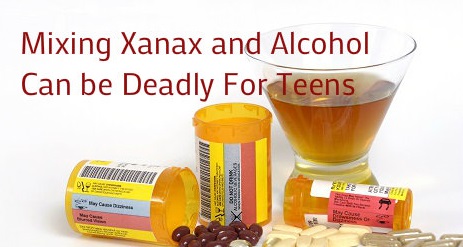
Mixing Xanax and Alcohol Can be Deadly For Teens
If you look up the number one prescribed medication in the United States you will find Xanax at the very top of the list. The anti-anxiety medication is so widely prescribed these days that it can be found in a shockingly high number of American households. Used to treat anxiety and panic disorders, the drug is also commonly prescribed for patients complaining of high stress. Despite the fact that Xanax has recently been implicated in some high profile overdose deaths, the drug continues to enjoy widespread popularity.
Xanax is part of a family of drugs known as diazepines. Its chemical designation is Alprazolam and in 2009, 44 million prescriptions for the drug were written. By 2011 diazepine prescriptions were numbering above 260 million, of which Xanax represents the lion’s share.
Dangerous Quick High
Unfortunately the drug is not only popular with patients and their doctors but with young adults and teens looking for a quick drug-induced escape from reality. Teens like Xanax because it is so accessible – just grab one out of mom or dad’s medicine cabinet, right? – but also because the drug offers such a quick “high.” Within just 10 or 15 minutes users can feel an extreme high or low sensation. Users also experience accentuated symptoms of sedation like slurred speech, droopy eyes and other kinds of psychomotor retardation. Essentially, the person feels like they are drunk on alcohol.
Xanax provides a quick high because it is metabolized quickly, but the high ends just as fast as it comes on. The problem is that the drug also induces a state of memory impairment that is akin to blacking out. This creates a high risk situation since the person senses the absence of the sought after feelings but cannot remember that they recently took a pill, leaving them quite likely to pop another one. Taking even two Xanax in a short amount of time can have serious consequences.
Unfortunately, many who abuse Xanax also abuse alcohol. This means that users are taking two depressants at the same time. It is just like doubling up on Xanax in terms of risk. Drinking along with taking a Xanax may double the high, but it also ratchets up the risk factor – ingesting two strong depressants can slow down respiration (breathing) and the central nervous system to hazardously low levels.
Symptoms of Use
Symptoms of Xanax use include slowed heartbeat, trouble concentrating, slowed breathing, sleepiness, confusion and loss of memory. According to reports from the Substance Abuse and Mental Health Services Administration more than 60,000 hospital admissions were the result of Xanax abuse in 2008. Since prescription rates for the drug have steadily climbed by 9 percent annually, current figures can be expected to vastly outstrip that number.
Benzodiazepines like Xanax are medically appropriate when used to help epileptics prevent serious seizures. The drug is sometimes prescribed to treat insomnia but warnings abound recommending that the drug only be used short-term for treating sleeplessness. It is probably most commonly prescribed to calm symptoms of generalized anxiety disorder, but again the drug is recommended only for short-term use, not more than one month.
Xanax works by increasing activity of the brain’s own soothing mechanism. Neurotransmitters known as GABA are naturally occurring sedatives. When these neurotransmitters are abnormally excited long-term a physical and psychological dependence (addiction) can result.
What this means is that it is not hard at all for people using Xanax to quickly feel like they need the drug in order to cope. Tolerance is a term which describes how the body adjusts to the presence of medications and eventually requires more of a substance in order to produce similar results. Teens who take Xanax can wind up addicted to the drug before they know it.
If a teen is mixing Xanax – or any medication recreationally – with alcohol, the potential for addiction skyrockets, as does the risk of lethal consequences.
OxyContin is the brand name for a specific form of oxycodone, an opioid narcotic medication known for its potential to trigger problems with drug abuse or drug addiction. Because of the medication’s association with increased abuse and addiction risks, sale of all forms of oxycodone are strictly controlled under federal guidelines. However, according to a new investigative report by the Los Angeles Times, the manufacturer of OxyContin—a company called Purdue Pharma—has failed to report known instances of illicit or illegal prescriptions of the medication to authorities for more than 10 years.
After the report in The Times, two state senators in California have called on the maker of OxyContin to turn over the names of California physicians it suspects recklessly prescribed its pills to drug dealers and addicts.
Oxycodone Basics
Oxycodone is a synthetic substance made in pharmaceutical laboratories from a specific chemical found naturally in a plant called the opium poppy. When it interacts with nerve cells in the body’s central nervous system (brain and spinal cord), it reduces the body’s ability to feel pain. The U.S. National Library of Medicine lists available forms of oxycodone that include liquids, concentrates, capsules and tablets. While some oxycodone-containing products are sold without additional active ingredients, other products also contain acetaminophen, aspirin or ibuprofen. In addition to OxyContin, oxycodone-based medications include Percocet, Percodan and Endocet.
The same mechanisms that give oxycodone the ability to ease pain also give it the ability to alter normal function in the part of the brain that regulates pleasurable sensations. It is the intensity of the drug’s effects on the brain’s pleasure centers that accounts for its association with profound risks for abuse and addiction. Because of the potential for misuse of oxycodone, federal regulators have placed it on a list of officially controlled substances called Schedule II drugs. All substances on this list have clear usefulness as therapeutic medications, but also present enough risks to warrant strong restrictions on their use.
OxyContin Basics
OxyContin comes in tablet form and was originally marketed as a safer, long-acting alternative to morphine, another opioid narcotic capable of reducing moderate or severe forms of pain. When the medication hit the market, its safe use was significantly undermined by its easy crushability. This crushability encouraged abusers to rapidly introduce OxyContin into their bloodstreams through IV injection or inhalation. In an effort to correct a widespread pattern of misuse, Purdue Pharma introduced a non-crushable form of the medication in 2009. Following the release of this new product, misuse of OxyContin dropped by almost 200 percent. However, significant numbers of people across the U.S. still use the medication illicitly or illegally.
New Findings
In 2002, Purdue Pharma started tracking doctors across the U.S. suspected of knowingly prescribing OxyContin to people addicted to oxycodone or other narcotic or non-narcotic medications, as well as doctors suspected of selling their OxyContin supplies to drug dealers. As of 2013, the company had identified more than 1,800 physicians believed to be participating in these activities. However, Purdue Pharma has never made a concerted effort to release their list of suspects to any federal, state or local law enforcement agency, or to a medical body responsible for disciplining doctor misconduct. In fact, the company has sometimes made efforts to deflect attention away from purposeful, improper OxyContin prescribing by publicly linking the illegal availability of the medication to such things as robberies, theft of OxyContin by family members of legitimate users, and patients’ efforts to obtain the medication from multiple doctors.
Purdue Pharma only openly revealed the existence of its internal list of misprescribing physicians in June 2013. Because of the immense profitability of OxyContin, some investigators and public health officials have openly questioned the company’s motivations for not revealing its knowledge on the issue at any point in the last 10 years. Spokesmen for Purdue Pharma counter these criticisms by asserting that, while they have never released the names of all suspected doctors, they have separately given medical groups and law enforcement officials the names of 154 of the 1,800 physicians in their database. However, since no one outside the company has seen the full list of suspected misprescribers, there is no way to independently gauge the accuracy of these statements.
Considerations
Some of the doctors under investigation for illegally prescribing or selling OxyContin have been involved in widespread distribution efforts that meet federal and state standards for drug dealing. For instance, one California physician was recently convicted of illegally selling over 1 million doses of the medication. Another doctor prescribed millions of dollars worth of OxyContin and other opioid narcotics to people known to have problems with drug addiction. Officials from Purdue Pharma state that they have no legal obligation to assist law enforcement or medical regulators in their efforts to control OxyContin’s availability.
03 Sep 2013
Fentanyl “Patches” – Deadly For Children
A 12-year-old girl from Clinton, Missouri was found dead in June 2013 after a suspected overdose of the Fentanyl patch. Destiny Spilter died after she stuck a used fentanyl patch on her thigh. The patch had been previously worn by her grandmother who, once done with it, threw it in the trash.
Fentanyl is an extremely strong opioid used to manage pain. It is 100 times more potent than morphine and 40 times stronger than heroin. Overdoses, some even fatal, are common.

Many patients are prescribed Fentanyl when other types of narcotic pain medications no longer offer relief. In most cases, this is because the body has developed tolerance to the pain killer, and it needs more and more of the substance to offer the same type of relief. Since many medications are lethal at such high doses, doctors must look to a different medication altogether instead of just increasing the dose of the current prescription. Fentanyl is a favored tool in the pain-management arsenal.
Use with Extreme Caution
Despite its benefits, however, Fentanyl must be used with extreme caution as even patients who have topped out of their traditional pain medications have found it to be too strong to tolerate. The patch, even at its lowest dose, has the potential to reduce respiration to the point of death.
The Fentanyl patch was created to offer continuous relief to patients in chronic pain, but over a period of several days. If a person were to ingest that amount of Fentanyl all at once, it would likely be fatal. Given its high potency, there are a number of safety advisories and side effect warnings regarding use of the drug. One of the FDA warnings recommends flushing the patch after use so that unintended recipients do not ingest the remaining residue — either accidentally or on purpose. Even though the Agency recognized that there may be some environmental concerns about flushing, it felt that the risk associated with accidental exposure far outweighed any potential risk to the environment or water sources.
Tragedy – Too Often
Destiny’s grandmother, who was using the patch to manage her chronic back pain, did not follow these fairly simple instructions. Not surprisingly, the curious young girl found the patch and put it on, perhaps mimicking the behavior she previously observed in her grandmother. Even after the patch is used for three days, studies show that it could still contain more than 50 percent of the original Fentanyl dose. Her body was unable to handle even the amount of Fentanyl that remained in the patch and she died.
Unfortunately, accidental overdose is not uncommon for the Fentanyl patch — especially in children. Children may be initially attracted to the patch, thinking that it is a sticker. And because the patch is meant to stay on the skin for up to 3 days, there is typically plenty of glue remaining to keep it securely on the child’s skin. If they place it in an area that is hidden by clothing, caretakers may not notice it until the damage has been done.
02 Sep 2013
Taking Drugs to Boost Grades
For some, college was a time for sleeping in and goofing off. For others, memories of college are associated with stress as students worked to achieve good grades while juggling intense academic requirements, extracurricular activities and relationships with a new level of personal responsibility.
The stakes are high. Students understand that their grades will help them secure a good job with financial security. Competition can be fierce to not only be accepted into but also remain in specialty colleges within the university that teach skills to teachers, therapists, accountants and engineers.
 “Smart Drugs” Not so Smart
Recently, ABC affiliate 13WHAM of Rochester, New York, highlighted one way that students choose to handle the pressure – misusing prescription stimulants to increase focus and eliminate the need for sleep, known as “smart drugs.”
Adderall is just one brand name drug that students abuse as a study aid. Prescribed to treat attention deficit hyperactivity disorder (ADHD), the drug is so widely issued by doctors that students find it relatively easy to obtain as friends may be willing to sell their extra pills.
A study published in The Addiction Journal indicated that the problem is becoming widespread. One in four college students indicate they have used pills to get through an exam or other stressful academic situation.
The 13WHAM story profiles an individual under the pseudonym of Steve who regularly uses stimulants to meet academic requirements. He said the medication increases focus and avoid sleeping, allowing for a 72-hour straight study session he did when taking 60 milligrams of Adderall, which paid off with good grades.
Adderall Abuse & Risks
Adderall abuse is becoming more common and the effects of the drug can lead to increased medical interventions and the need for emergency care.
Students are unaware of or underestimate the risks associated with the misuse of prescription drugs. They may believe that prescription drugs are somehow safer than street drugs or that there isn’t a risk of mixing drugs with other medications. Experts, on the other hand, warn that the drugs can be extremely dangerous, with adverse reactions including stroke, heart attack and psychotic episodes.
13WHAM reported that university health center doctors were seeing increased attempts by students to get prescriptions for stimulants as finals approached. The physicians said that while they are generally able to help students who have a diagnosis for ADHD, it takes more than one exam session to determine whether a student is abusing stimulants.
What Parents Can Do
Parents should take time to talk to their college-age children about the risks of using stimulants. They can also speak openly about their opinions and rules related to substance use. While students enjoy an increased level of freedom at college, many are still receptive to their parents’ viewpoint while they are receiving support, both financial and otherwise.
While parents may doubt their influence, particularly after their teen has left home to pursue a degree, studies show that parents play an important role. Teens who abstain from substance use repeatedly indicate that their parents were influential in helping them decide not to use substances.
Parents can also be a source of support for their college-age child as they face the intense pressure and competition to succeed in school. Keeping an open conversation about the challenges and expectations involved with getting a degree may help a student avoid making poor decisions related to stress management.
When it comes to teen alcohol and drug use, it seems like there’s always a new method that young people are finding to get high – chugging cough medicine, sniffing glue, snorting bath salts or mixing old medications found in the family medicine cabinet. While it’s normal to be curious, one poor decision can change a person’s life forever.
That’s why authorities and health officials are concerned about a dangerous new trend: smoking alcohol. Because the lungs have such a large surface area, alcohol is absorbed at a much quicker rate when it is inhaled using vaporizers, i.e.: dry ice and bicycle pumps connected to old plastic bottles.
Breathalyzer Comparison

According to Dwayne Baird, spokesperson for the Utah Department of Public Safety, one reason individuals may choose to inhale alcohol is because they believe it won’t show up on a breathalyzer. But Baird says that anyone who understands how the test works knows that a breathalyzer assesses the blood alcohol content and inhaling alcohol actually leads to a higher concentration.
Another reason that people choose to smoke alcohol instead of drink it is that inhaling directly into the lungs delivers a quicker, more intense high. Under normal circumstances, alcohol would be consumed then pass through the body’s stomach and liver where it takes time to metabolize. Dr. Barbara Crouch, Executive Director for Utah Poison Control, equates the practice to binge drinking – when too much alcohol is consumed too quickly, the body has a difficult time successfully processing all of it.
Baird says that the Department of Public Safety still runs across more cases of normal alcohol consumption than it does inhalation methods, but with information able to spread rapidly through social media sites, its popularity with teens could spike quickly.
Scary Results
The body has normal ways of signaling that it has had too much alcohol. When someone drinks to excess, the body responds by causing a person to vomit. That doesn’t happen when alcohol is inhaled. Instead, it passes straight through the lungs into the bloodstream and up to the brain. The problem with that, says Baird, is that it’s difficult for a person to tell when they’ve reached their limit.
Young people in particular tend to regard themselves as invincible and often don’t consider the consequences of their actions or how such consequences might impact their future. But inadvertent alcohol poisoning is a real and even bigger threat when inhaling than drinking alcohol.
29 Aug 2013
Drug May Help Teens Overcome Cocaine Addiction
Teens being treated for substance addiction may soon have a new tool to combat their drug problem. A new study finds that outcomes are improved for cocaine addiction treatment when the drug Topamax is included as part of the strategy for recovery.
Treating cocaine addiction can be challenging. Teens that begin using cocaine can become addicted quickly, and when treatment is sought and completed, relapse can be common. Teens often enter into a cycle of recovery and relapse with cocaine addiction.
Addiction to Alcohol
It is common for teens addicted to cocaine to also be addicted to alcohol. Abuse and addiction of both substances can make treatment complicated. For some, the traditional route of cognitive behavioral therapy is not an effective strategy for recovery to be a permanent state.
Topamax, a drug often prescribed for the purposes of treating epilepsy and, in more recent cases, weight loss, has been shown to help those attempting recovery from cocaine and alcohol addiction.
The Study
The research team from the University of Pennsylvania School of Medicine used a double-blind, placebo-controlled design to test the effectiveness of topiramate in treating addiction, particularly in cases where cocaine addiction is complicated with a dependence on alcohol.
Previous studies have proven the effectiveness of topiramate in treating alcohol addiction. Other studies have shown that it can help prevent relapse in those who have received treatment for cocaine addiction. However, this is the first study to explore its application in treatment for a combined addiction to cocaine and alcohol.
The study’s results are critical because those who struggle with cocaine addiction commonly also struggle with alcohol dependence. Targeting the addictions as a unit may be an effective strategy to make recovery more successful.
The study was conducted over a 13-week period that included 170 individuals who met criteria for alcohol and cocaine addiction. The trial produced mixed results.
The Results
The researchers discovered that the drug was effective at reducing the cravings for alcohol, but actual drinking did not decrease. It was not found to impact cocaine cravings.
However, the study participants that were taking topiramate were more likely to remain in treatment and avoid cocaine use during the last three weeks of the trial when compared to participants who were taking a placebo.
The researchers also found that participants taking topiramate were more likely to benefit from the drug if they reported more severe withdrawal symptoms. Those who indicated a high level of restless behavior, agitation and depressed mood were more likely to report benefiting from topiramate.
Counseling and the Drug
First author of the paper, Kyle M. Kampman, M.D., professor of psychiatry and medical director at the Charles O’Brien Center for Addiction Treatment, explains that while counseling is the first choice for addiction, there are some patients who are not responsive to this strategy.
The results of the study indicate that for those who have a particularly treatment-resistant addiction, the addition of a topiramate treatment in addition to cognitive behavioral therapy may result in better outcomes.
The study’s findings add to a growing body of research that supports the use of topiramate to aid in treating addiction. A previous study conducted in 2005 provided evidence that addicts treated with the drug were able to abstain from cocaine use for three weeks or longer.
The researchers note that the failure of topiramate to reduce alcohol use was puzzling, but may be explained by the severity level of that particular group of participants. The effects may be more visible when an individual has a habit of drinking heavily.
The Test Subjects
The study’s findings were the result of a trial conducted among a group of addicts who had an average age of 45 years and which was largely composed of African-American males. The groups of men examined using the drug of treatment and a placebo were similar in terms of sociodemographic variables or drug and alcohol use.
The findings of the study were published in a recent issue of the journal Drug and Alcohol Dependence.
Drug addiction can affect a wide array of people, but it’s mostly the celebrities who are struggling with substance abuse that we hear about, such as Amy Winehouse and Corey Haim. What are the reasons for all this drug abuse in Hollywood?
First you begin with the basic understanding that addiction is a serious issue, one that doesn’t discriminate and can affect anyone. Toss in celebrity-status, wealth, along with high expectations, and you see how drug abuse can take hold: the euphoric high provides temporary relief; a connection is made in one’s mind; and that connection becomes a crutch whenever moments of extreme stress or depression come up.
Inner Drive to Get Well

Celebrities and drug addiction go hand in hand so often that the stigma appears to be fading, and since there seemingly aren’t penalties for using drugs in their professional lives there’s less motivation to get treatment. For all addicts, an intense passion and drive to get well is needed to build back the sober life they were once living.
This is all a backdrop for a teenager today struggling with substance abuse. Celebrities are constantly in the spotlight, their images and details of their lives flashed everywhere, saturating a teen’s mind, with the lifestyles of these celebrities having a huge impact. If a teen going down the path of addiction idolizes someone who is out partying with nothing to lose, they might not think about the consequences that can come from a life of drug addiction.
Teen’s Similarities to Celebrities
It’s not often that the other side of the story is reported to teens. Celebrities are people too and might have some of the very same insecurities, desires and needs as their teenage fans. Everyone has a lot to lose if they go down the road of substance abuse, and it’s a hard path to come back from.
Along the lines of Dr. Drew Pinsky’s writings, celebrities appear to be genetically wired to be vulnerable to addiction because of their drive to be successful entertainers. Perhaps this is why they seek the high that comes with being in the spotlight, and then seek the artificial high that comes from drugs. It’s important to be aware of what your teen is experiencing and perhaps discover the root of their desire to get involved in these various, dangerous activities.
27 Aug 2013
Can Magnets Fight Cocaine Addiction?
Cocaine addiction is one of the toughest illnesses to treat. Although scientists do not yet understand the entire mechanism of addiction, it is believed that the brain’s pleasure center plays a major role in the disease. Pleasure center cells appear in the prefrontal cortex and have long been thought to be responsible for impulse control. In fact, it is believed that a low level of activity in the prefrontal cortex is one characteristic of an addict.
The method used to treat cocaine addiction has traditionally been a combination of abstinence and psychotherapy or behavioral therapy. Given how strong cocaine addiction can be, however, many people do not stay in recovery permanently. In fact, it can take several cycles of drug rehab to finally be free of the relentless cravings. By this point, many cocaine addicts have suffered from the consequences of prolonged addiction such as organ damage, social issues, family problems, financial disaster and job loss.
Prefrontal Cortex Activity and Cocaine Addiction
 There is new hope for people suffering from cocaine addiction and it comes in the form of a potential cure, not just remission. Researchers at the National Institutes of Health (NIH) and the University of California at San Francisco have been able to eradicate cocaine addiction in rats by focusing beams of laser light into their brain matter.
The scientists used genetic engineering to place rhodopsins (proteins that react to light) directly into the rats’ brain cells at the prefrontal cortex. When light is introduced, those particular cells will fire. The rats were then administered enough cocaine to develop a bona fide addiction, the hallmark of which is engaging in behavior that will result in the administration of more cocaine.
Using fiber optic cabling implanted in the tiny brains, the researchers were able to direct laser beams onto the brain cells that contained the rhodopsins. Once these prefrontal cortex neurons were activated, the subject immediately stopped all cocaine-seeking behavior. When the light was extinguished, the rats resumed behavior associated with addiction.
Although this is great news for those engaged in addiction research, the practical implications are less clear. At issue is the ability to activate prefrontal cortex neurons in human beings on a continuous basis without affecting activities of daily life. Although it is certainly possible to carry out surgical experiments similar to those undertaken by the NIH, invasive brain surgery is not something we would consider as a long-term treatment method.
Transcranial Magnetic Stimulation for Cocaine Addiction
Thankfully, scientists are already researching ways to activate prefrontal cortex neurons in cocaine addicts’ brains without using a scalpel. Transcranial magnetic stimulation (TMS) involves using a magnetic field on top of the scalp to influence behavior of the cells below the skull. This non-invasive and completely pain free process uses a coil to focus the magnetic field onto particular areas and patients experience nothing more serious than the feeling of being tapped on the head. In order to activate the cells, a high-frequency pulse is used.
The NIH plans to begin human trials of the treatment soon and hopes to show that TMS can activate prefrontal cortex neurons as effectively as the laser-light method. It remains unclear whether the relief achieved will be only temporary and, thus, require indefinite treatments. In any event, TMS may provide craving relief long enough to allow more traditional methods of cocaine addiction treatment to take hold.